This is a super quick overview of VayNet network architecture:
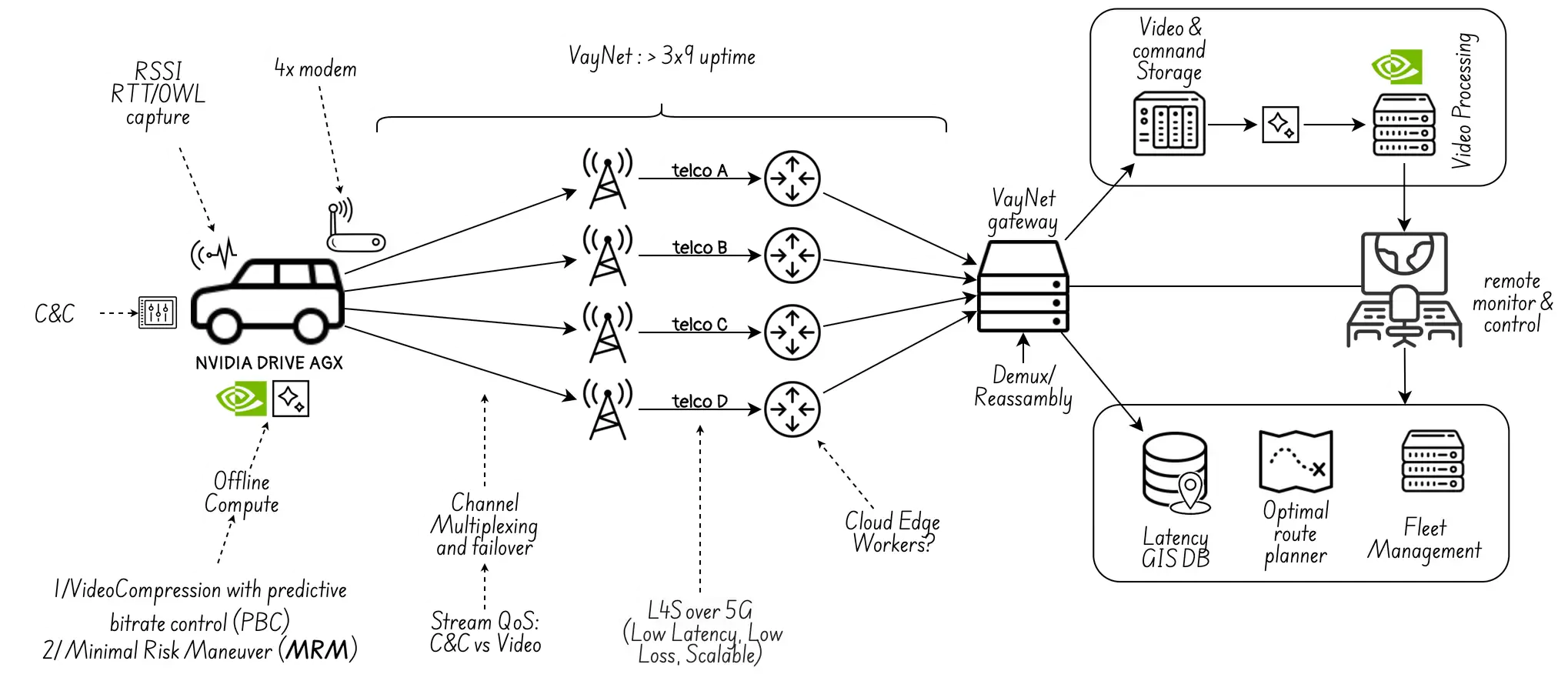
Besides the use of 4x redundante network channel (using a smart packet spraying channel multiplexing), they alos advertise the use of L4S, aka Low Latency, Low Loss, Scalable Network Stack, using the “ECN” or Explicit Control Notification mechanism within the TCP stack. It would be interesting to see how one could use Amarisoft to validate L4S efficiency in emulated environments.
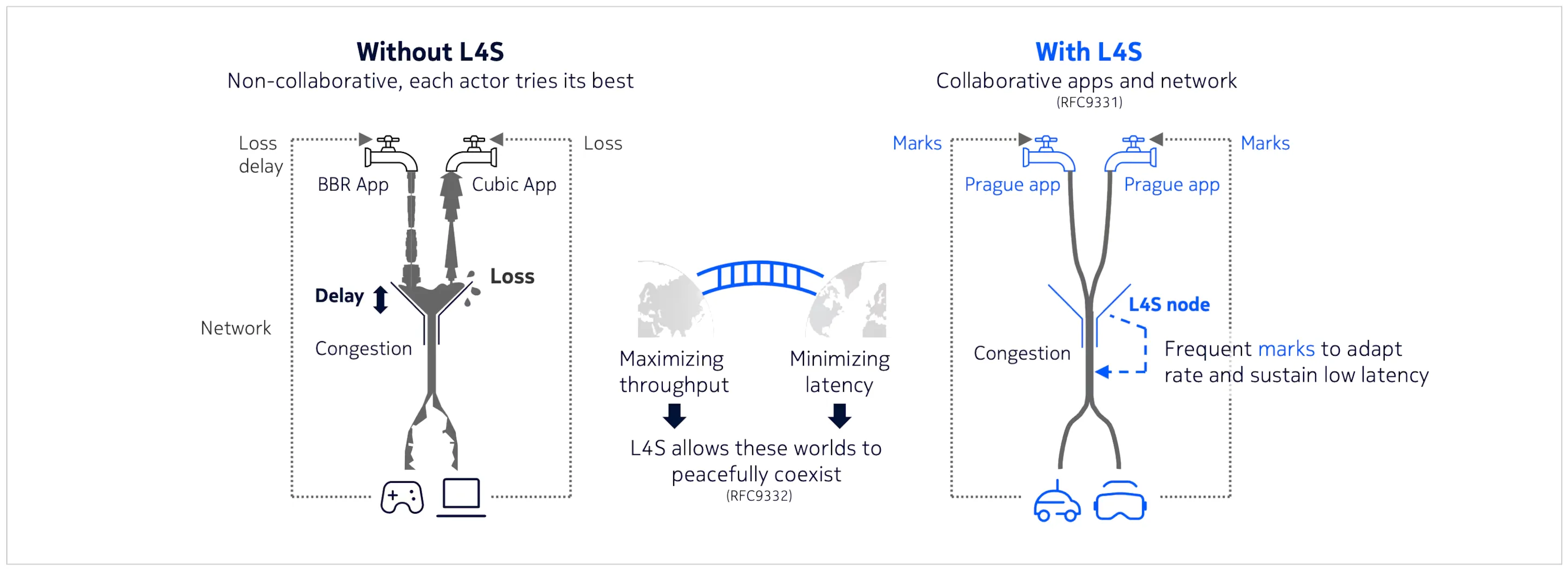 (image source: Nokia Bell Labs)
It is also worth mentionning the use to neural network based routing, probably using reinforcement learning to optimize the path by maximizing the network connectivty (measuring in terms of latency and RSSI), this preventing the vehicule from setting into “cellular shadow” areas in the city.
Last but not least, the teleoperation needs to be fail-safe, meaning that a Minimum Risk Maneuver (MRM) system need to be able operate autonomously in the vehicule.
DrawIO diagrams used in this memo:
